
Artificial Intelligence (AI) is a game-changer for the animation industry, as it reduces production costs, accelerates project workflows, and enables creators to produce high-quality visuals faster. What required extensive hours of brainstorming, producing, experimenting, and reworking on a single task can now be done using text prompts. Whether it is character animation, 3D virtual scene production, or video enhancement, AI has revolutionised the animation industry.
In this blog post, we will cover everything about AI in animation in 2026 – definition, top uses of AI, popular AI animation tools, role of 3D animators, challenges of AI and the future of animation.
What is AI Animation?
AI animation is the use of artificial intelligence or machine learning algorithms to speed up 2D/3D production pipelines by automating tasks such as character creation, VFX, asset creation, lip-syncing, motion capture, movement generation, rendering, and cleanup. This technology transforms simple text prompts into high-quality scenes, characters and visuals requiring less manual effort and more human creativity.
How is AI used in Animation?
AI is utilised in the 3D animation production pipeline to generate characters, images, visuals, environments, and backgrounds. It also helps in adding special effects (VFX), adjusting lighting, character rigging, 3D modeling, and animation.
Let’s take a quick look at how AI is used in the animation.
- Background and image generation where users type a prompt, and AI generates detailed characters, environments, and scenes.
- Motion Capture, in which AI turns 2D video footage into high-quality motion capture video showcasing realistic body animation.
- Auto lip-sync and Facial animation, in which AI analyses voice input to sync dialogues with lip movements and facial expressions.
- In-Betweening, in which AI generates intermediate frames between keyframes to create a smooth animation flow.
- Rigging and Style transfer, where AI automates 3D character rigging and rotoscoping.
How AI is Transforming the 3D Production Pipeline
AI is transforming the 3D pipeline by automating several stages of the production pipeline, enabling faster turnarounds, and lowering production costs. Let’s take a quick look at the impact of AI on the animation pipeline.
Let’s read about the top applications of AI in animation industry:
Character Animation
AI software such as Reallusion Cartoon Animator 4 helps create realistic and human-like characters by analysing facial expressions, body movement, and motion data. Tools like Lip Sync AI further help match lip movements with dialogues.
This is useful for:
- Films
- Video games
- Virtual influencers
- VR avatars
- Educational content
Virtual Environments
Generative AI can generate detailed and ultra-realistic 3D worlds for films, games, and training simulations to give users an immersive gameplay experience.
This is especially useful for:
- Background generation
- Object tracking
- Rotoscoping
- Scene clean-up
- Faster VFX workflows
Natural Elements Simulation
AI also helps create simulated natural elements such as water, fire, smoke, cloth, and hair movement.
This is useful for:
- Reducing production costs
- Enhancing visual stories
Concept Art and Pre-Production
AI tools such as Midjourney, DALL-E 2, and Kling AI instantly generate mood boards, characters, environments, and visual ideas from basic text prompts.
This is useful for:
- Detailed storyboards
- Virtual character formation
- Enhancing visual effects
Personalised Interactive Content
AI tools like Rive can create personalised and interactive animations that respond to user behaviour in real time.
This is valuable for:
- Commercial ads, websites, games, and digital experiences
- Higher engagement and user interaction
- Real-time feedback
Also read: How to Use AI in Filmmaking in 2026
How Animation Reduces Costs and Makes Production 10x Faster
Artificial Intelligence in the 3D animation production pipeline not just speeds up production but also streamlines the overall production process by automating tasks, expanding creative possibilities, minimising errors, and eliminating risk factors. Due to the numerous benefits of AI, “Over 90% of business leaders foresee GenAI playing a larger role in the entertainment industries…” according to the Animation Guild.
- Faster Production: AI reduces production time by automating steps such as in-betweening, clean-up, rigging, background generation, rotoscoping, and syncing.
- Reduced Costs: AI helps lower your production costs significantly by reducing dependence on heavy software, costly studios, and more manpower.
- Improved Quality: AI algorithms and advanced simulations help create high-quality, realistic characters, animations and visuals that instantly uplift the user experience.
- Better Workflow: Applying AI in animation improves efficiency of work, reduces production costs and speeds up project turnaround times.
- Flexible Customisation: AI helps customise animations to meet specific projects’ requirements, including creating custom characters, style of animation and aligning with the brand’s tone.
Future of AI in Animation
Artificial Intelligence is here to stay, and its impact is widely seen in every industry as discussed above. It has become an important part of the production pipeline, transforming the 3D animation production and delivering exceptional outcomes within a few seconds.
The future of AI in animation could bring us to see:
- Real-time animation generation
- Smarter personal AI assistants for artists
- Better physics simulations
- Faster rendering engines
- More personalised viewer experiences
- Easier tools for independent creators
Top Industries Using AI in Animation to Boost Customer Engagement
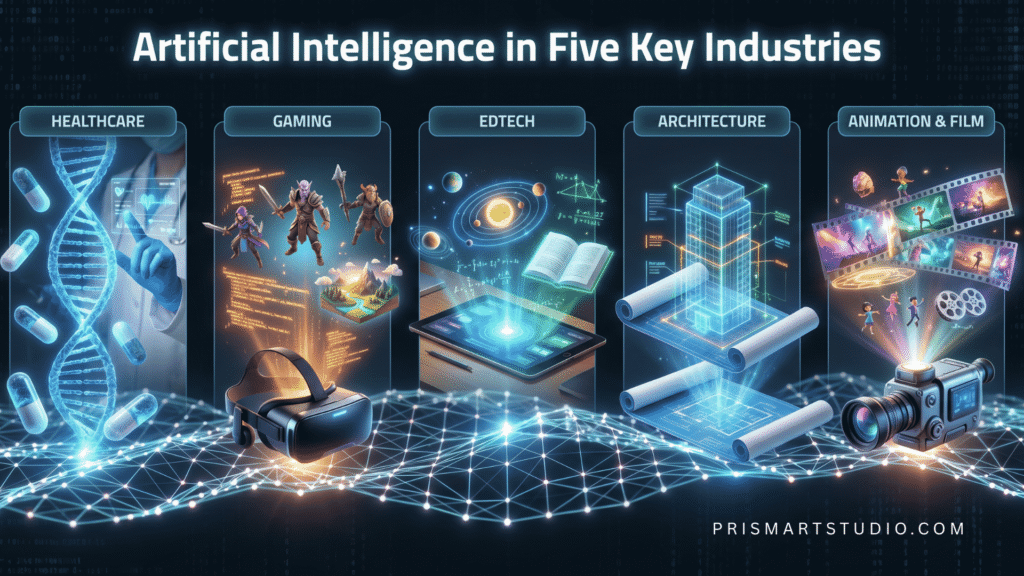
AI in animation is not just limited to cartoons, movies or games. Several industries, such as healthcare, entertainment, advertising, education, architecture and real estate, use AI video production to connect with their audience, improve engagement and boost conversions.
Let’s take a quick look.
| Industry Type | Uses and Applications of AI |
| Healthcare & Pharmaceuticals | AI creates 3D visuals for medical training, patient education, and complex surgical procedures. |
| Gaming | AI builds and animates 3D gaming characters, NPCs and virtual environments for an immersive gaming experience. |
| EdTech | AI in e-learning turns complex topics into interactive visual lessons and educational videos for higher student engagement. |
| Architecture & Real Estate | Architects and real estate use AI to create realistic 3D walkthroughs of homes, offices, and commercial spaces for previsualisation. |
| Animation & Film Production | AI helps create scripts, detailed storyboards, realistic characters, lip-sync, and add special effects using text prompts. |
| Advertising & Marketing | Eye-catching commercials, product explainers, launch videos, social media creatives, and social media content to boost online reach. |
| Virtual Reality (VR) | AI creates hands-on experiences of gaming, training simulations, virtual tours, and interactive experiences. |
| Corporate Training | AI Corporate training videos simplify training, engage employees and lower costs on manual training. |
| E-commerce & Retail | AI is used to create product displays, virtual try-ons, and personalised shopping experiences for maximum customer engagement. |
| Media & Entertainment | Creates films, TV shows, music videos, and digital visual content using AI for mass entertainment. |
| Urban Planning | Present smart city models, infrastructure layouts, and future development projects through realistic AI simulations. |
| Sports & Fitness Industry | AI in animation is used for sports event simulations, animated workout guides, virtual trainers, and wellness tutorials. |
| Interior Design | Interior designers use animated 3D interiors and virtual room walkthroughs for better client communication. |
| Event Planning | AI-generated animated invitations, venue tours, and promotional videos improve event marketing and planning. |
| Hospitality & Tourism | The hospitality industry uses AI to show 3D virtual tours of hotel spaces that maximise tourist bookings. |
| Cosmetics & Beauty | Beauty brands use AI in animation in marketing to showcase product demonstrations, product launches, and makeup tutorials. |
| Publishing Industry | Publishers use AI to create impactful book covers, book trailers and other marketing materials. |
| Food & Agriculture | The food and agriculture industry uses AI to create ultra-realistic 3D models of food items and farm layouts, and enhance customer experience. |
| Lifestyle & Fashion | The fashion industry uses AI to show 3D models of clothing, host virtual fashion shows, make AI fashion models and drive sales. |
| Automotive Industry | The automotive industry uses AI to show realistic 3D car models in virtual environments, highlighting every feature, to engage potential customers |
| Manufacturing | AI helps create training, product demos, and safety videos useful for workers in the manufacturing industry. |
Other fields such as urban planning, mental health, the music industry, the sports industry, archaeology, cybersecurity, advertising, interior design, research and development, event planning, human resources, legal sector, fitness industry, hospitality, cosmetics, NGOs, travel and tourism, retail industry, publishing industry, food and agriculture industry, fashion, automotive, manufacturing also rely on AI for video production services.
What are the Challenges of using AI Video Production?
While AI has proved to be a boon for all industries, it still comes with its own challenges and technical limitations in the AI video production process. Some of these challenges in AI video creation include:
- Limited Creativity: AI algorithms track existing data and user behaviour patterns. Though AI can create custom animations, art styles, and detailed visuals, it can never replace human creativity and intuition.
- Lacks Emotional Depth: AI-generated animation may look realistic, but it still lacks emotional depth. Thus, it is important to add a human touch to make the 3D animated characters and scenes look realistic.
- Quality Control Needed: Though AI generates output with a simple text prompt, a ‘quality check’ is still essential to review and refine the work for production quality.
- Learning Curve: 3D animators should learn to adapt to new AI tools, practice, and experiment with them while also holding on to the traditional animation tools and techniques.
- Dependence on Data: AI depends on the database fed into its system. If the data is limited, low, biased or low quality, it will only produce repetitive, biased, or weak results.
Top 5 AI Animation Tools in 2026 For Studios
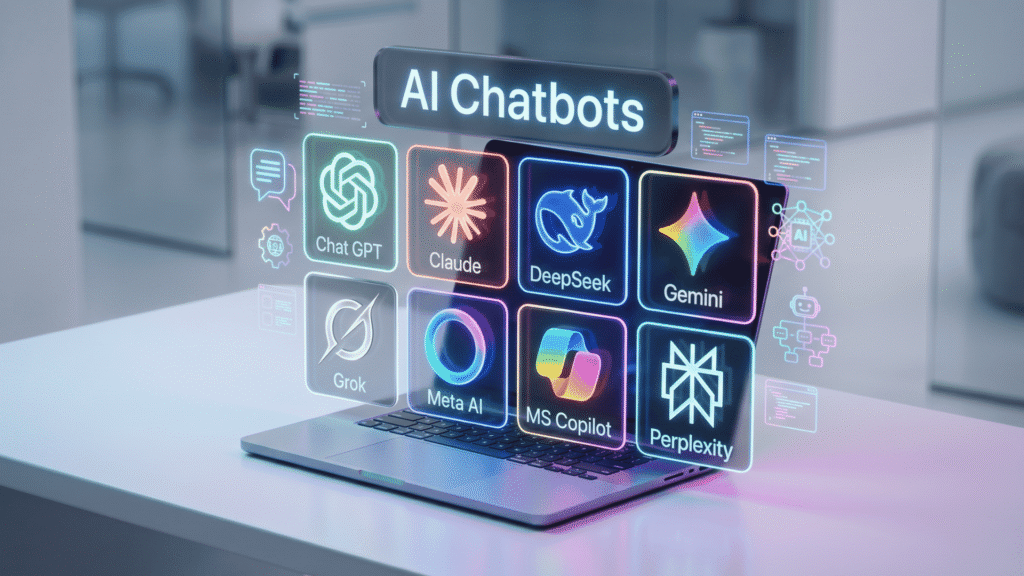
In 2026, the best animation tools for studios that accelerate their 3D animation production at low costs include Runway, Higgsfield, Sora 2, Seedance 2.0, Adobe Firefly, and more.
- Runway ML: Used for video editing, background removal, scene enhancement, and motion tools. Offers real-time video processing for filmmakers, creators and artists.
- Higgsfield: This video-generation platform converts a simple product link, an image, or an idea into short-form, cinematic videos.
- Sora 2: Sora 2 by OpenAI specialises in producing trend-accurate, cinematic videos from a single idea or an image.
- Seedance 2.0: Seedance 2.0 generates high-quality short films, product launches, and campaign videos in the native language simply through text prompts.
- Adobe Firefly: This platform gives you unlimited access to generate AI images, videos, audio, and designs using top AI models such as Adobe, Google, and OpenAI.
Conclusion
AI in animation has swept into every stage of the 3D production process, and given its benefits, it seems impossible to do away with it. This technology has not only reduced turnarounds but also lowered production costs, improved quality and opened up creativity opportunities for small-scale studios.
However, we still need humans to rework on AI-generated outputs to add a human touch and originality. It is only when we achieve a striking balance of AI and human creativity that we can produce high-quality output.
Need AI-powered Animation production for your brand? Contact the best AI animation company in India, Prismart Studio, with 14+ years of experience in delivering top-quality 3D animation services, AI game animation services, and VFX services to global clients with fast turnarounds, lower costs, and full AI-powered production pipelines.
Get in touch to book a free demo or view our AI portfolio.
FAQs
What is AI in animation?
AI animation is the use of AI tools such as ElevenLabs, Dalle-E, ChatGPT, Google Nano Banana, and Kling for 3D character animation, 3D asset creation, VFX, and 3D animation.
Can AI replace animators?
No. AI is a supporting technology and not a tool to replace animators. Human touch still remains important in creativity and storytelling.
Is AI animation expensive or cheaper than traditional animation?
No. AI, in fact, lowers the overall production costs by automating manual tasks and making production more efficient.
What are the best AI animation tools in 2026?
Some of the best animation tools in 2026 include Runway ML, DeepMotion, Cascadeur, AnimateDiff, and Adobe Sensei.
What is the future of AI animation?
In the future, AI will be capable of higher productivity, smart workflows, real-time production and enhanced collaboration.